On April 17 and 18, accompanied by the interim director of the WSCRC Man Wang, Consul General Wang Donghua from the PRC’s San Francisco Consulate visited the Snohomish County Executive Office, the Economic Alliance of Snohomish County, the Port of Everett, the Washington State Department of Commerce and the City of Bellevue. Consul Wang discussed with leaders from those agencies on the importance of promoting and strengthening a healthy bilateral relationship between Washington state and China. All parties acknowledged the importance of collaborations in trade at this critical stage of U.S-China relations. New to the region, Consul Wang was very impressed with the economic status and business environment in Washington state.
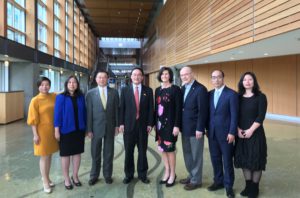
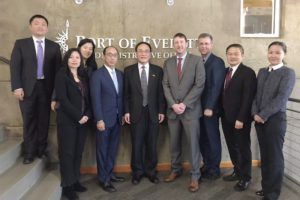
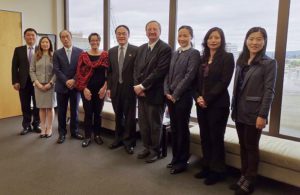
 On March 29 and March 30, 2019, the delegation met with a diverse group of local industry leaders, businesses, economic development organizations, academics, and civic and community leaders, including WSCRC members Global Innovation Exchange and Boeing, to discuss the impacts of the ongoing trade war on Washington state.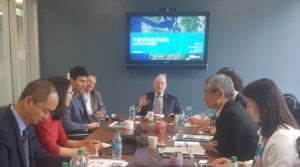
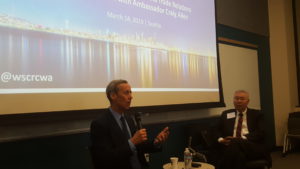 On March 14, 2019, Ambassador Craig Allen, President of the US-China Business Council and a former commercial diplomat to China, guided a lively interactive discussion on the current state and the future of the U.S.-China trade relations. He shared his expert insights on where the bilateral relationship is headed, including the dynamics at play in the ongoing negotiations, what to expect from the potential meeting between the two leaders in late-March, as well as the potential impact of reforms to export controls and investment restrictions to companies in the high-tech space. Amb. Allen argued that the current trade war would very likely morph into a technology war.