WSCRC

Washington State China Relations Council

  • ABOUT US
    • Mission and History
    • Board of Directors & Staff
  • MEMBERSHIP
    • Membership Levels
    • Member Directory
    • Member Spotlight
  • EVENTS
  • RESOURCES
    • WSCRC News
    • Bi-Annual Report
    • Media Relations and Positions
    • Washington-China Economic Relationship
    • WSCRC Congressional Report
    • Book Talk Series
    • WSCRF Charitable Activities
    • Webinar Recordings
  • WSCRF
  • Contact

Oct 10 2018

NCUSCR CHINA Town Hall

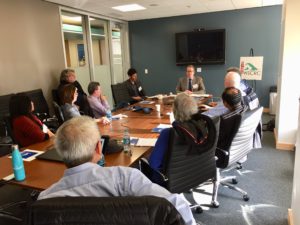
On October 9, 2018, the Washington State China Relations Council, in partnership with the National Committee on U.S.-China Relations, held the annual CHINA Town Hall featuring speakers former U.S. Secretary of State Condoleezza Rice as national webcast speaker and local speaker Andrew Batson, China Research Director at Gavekal Dragonomics, an independent economic research firm with offices in Hong Kong and Beijing. CHINA Town Hall is a national conversation about China that provides Americans across the United States and beyond the opportunity to discuss issues in the relationship with leading experts. It took place at 100+ venues across the United States and Greater China.

Condoleezza Rice served as the 66th Secretary of State of the United States, the second woman and first African American woman to hold the post. During the interactive webcast discussion moderated by Stephen A. Orlins, President of the National Committee on U.S.-China Relations, she spoke about her personal experience working in China as the Secretary of State under President George W. Bush. She highlighted the benefits of free and open trade with China, including economic growth, increased innovation, and enhanced exchange under a rules-based system. In answering a question about the current trade tensions between the United States and China, she emphasized in importance in reciprocity. Speaking about her own experience with the National Committee on U.S.-China Relations at the beginning of her career, she noted that NCUSCR was pivotal in shaping her understanding of China.

Andrew Batson’s presentation focused on the future of economic ties between China and the United States. Assessing the aims of President Trump’s administration in issuing tariffs and heightening trade tensions between the two nations, Andrew noted that volatility in the Chinese economy began to occur before the tariffs were announced. According to his research, exports remain a large portion of China’s economy, but their market dominance is declining. He pointed to similarities between the American and Chinese economies in that they are both dependent on domestic demand, as opposed to exports. In his concluding remarks, Andrew stated that if the trade war is a negotiating tactic, it is not likely to succeed. But increasingly, it appears to be an opening move in a long-term strategy to disengage the economics of the United States and China.

A spirited Q&A session followed Andrew’s presentation. Questions from attendees addressed how the trade conflict will affect business in both the United States and China, as well as implications for the Belt and Road Initiative. Andrew drew from his extensive research on the Chinese economy and detailed his projections by industry, discussing tech, agriculture, and consumer goods.

WSCRC extends thanks to WSCRC board member Sean Connell for serving as a moderator for the event and for WSCRC board member Nelson Dong at Dorsey & Whitney LLP for providing the venue.

Summary author: Mengyao Liu

Written by wscrc_admin · Categorized: Recent News · Tagged: economic policy, Gavekal Dragonomics, NCUSCR, tariffs, trade war

Oct 05 2018

Corporate Executive Briefing Series: Doing Due Diligence in the China

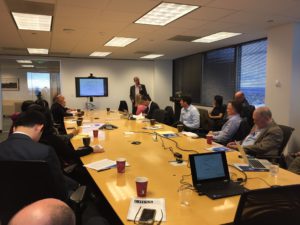
On October 4, 2018, the Washington State China Relations Council held its fifth session of the Corporate Executive Briefing Series, featuring Dane Chamorro, Senior Partner at Control Risks Asia Pacific business. A former US diplomat, Dane was previously Director of Global Risk Analysis for the Asia Pacific region and Managing Director of the company’s North Asia business, encompassing Greater China, Korea and Mongolia. The Corporate Executive Briefing Series is a series of conversations which aims to provide a unique venue in which Washington business owners and executives can substantively increase their knowledge of commercial engagement with and in China.

Control Risks is a specialist global risk consultancy that helps organizations succeed while remaining secure, compliant and resilient. Drawing from his extensive experience working throughout China and Asia for Control Risks, Dane discussed how President Xi Jinping is altering the Chinese economic and political landscape in a manner that emphasizes a Party led, regulatory driven model governing data, capital, social control. This “alternate ecosystem” will require foreign operators to adapt to new rules, and standards. Using the example of increased steel production in provinces outside of Beijing’s vicinity despite regulatory pressure, Dane explained the motives and targets of the Chinese government’s massive reorganization led by President Xi.

In terms of foreign involvement in China through businesses, investment, and other avenues, Dane cautioned that trade conditions will worsen before they improve as the US-China trade dispute unfolds. He cited a few specific ways in which US companies will be impacted, concluding that foreign manufacturers are likely to benefit in the short term and see some business growth. However, multinationals will remain disadvantaged in the longer term as they are unlikely to have equal opportunities as local competitors, given the national and local resources and support that local Chinese companies can access, and the operational and regulatory obstacles that foreign companies are facing.

The Q&A session addressed the changing role of due diligence in the China market during this moment in US-China relations, as well as the experience of US businesses working with Chinese partners. In answering an audience question about precautions companies should take before doing business in China, Dane called attention to the need for a comprehensive appraisal of a businesses and prospective partners, especially to establish assets and potential liabilities.

WSCRC extends thanks to WSCRC board member Sean Connell for serving as a moderator for the event.

Summary author: Mengyao Liu

Written by wscrc_admin · Categorized: Recent News · Tagged: Business, China, corporate, due diligence, trade

Oct 02 2018

Policy Briefing Series — US-China Trade War: Get the Facts

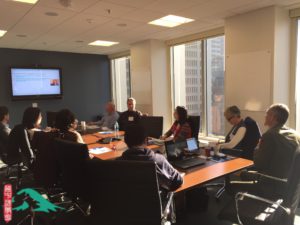
On September 20, 2018, WSCRC hosted a roundtable discussion led by two locally based experts on international trade and the current U.S.-China tariff war—Robert Hamilton, Washington state trade advisor, and Andrew Batson, Director of China Research at Gavekal Dragonomics.

Robert Hamilton emphasized the importance of properly understanding and interpreting trade data when assessing the potential impacts of the current dispute on Washington’s economy. Several major exports included in China’s tariff list are inaccurately credited to Washington, such as soybeans (grown in the Midwest and only consolidated in Washington) and passenger vehicles. Correcting for these anomalies, an estimated $800 million in Washington state goods are directly subject to Chinese tariffs invoked within the last year, including wheat, cherries, and other agriculture products and processed foods. It should be noted, however, that at the time of this presentation these estimates were based on the most recent list of enacted tariffs, and thus exclude the latest round implemented on September 24. He also highlighted the intense efforts, over many years, to develop an export market in China for Washington state agricultural products; these markets could be irrevocably harmed by a prolonged trade war.

Although China, as a net exporter with the U.S., has less imports to apply tariffs to, Mr. Hamilton pointed to several non-tariff retaliatory actions available to the Chinese government with deleterious impacts on Washington. These include challenging Washington state solar subsidy programs at the WTO and restricting the export of important manufacturing inputs, such as polysilicon used by REC Silicon operations in Moses Lake.

According to Mr. Batson, Trump Administration objectives are to impose enough pain through tariffs to force China to change its current industrial and market access policies. However, it remains unclear how much pain China is able or willing to endure. Indicators on the impact of the trade conflict on the Chinese economy are mixed. Unlike in the U.S., the Chinese stock market has been down this year, but property markets have remained strong. The RMB has also depreciated 5% since the start of the year (and 8% from a recent high vis-à-vis the U.S. dollar), helping to partially offset the impact of tariffs. Moreover, China’s exports have been decelerating for quite a while, well in advance of U.S. tariffs, making it difficult to separate the effect of U.S. tariffs from broader structural shifts preceding the current dispute.

Longer term, it remains unclear what the Trump Administration’s exit strategy. The invocation of Section 301 of the 1974 Trade Act was intended to be used in unique circumstances to impose penalties on trade partners with most-favored-nation (MFN) status. When China ascended the WTO in 2001, it concomitantly gained MFN status on a permanent basis with the U.S., thereby removing U.S. leverage to review and potentially deny renewal of MFN status on an annual basis. The Trump Administration’s usage of Section 301 is interpreted by some to represent an effort to undermine China’s MFN status.

Summary Author: Spencer Cohen

Written by wscrc_admin · Categorized: Recent News · Tagged: policy, trade war, US-China relations

Sep 28 2018

Founders Forum: Conversation with Ben Zhang

On September 27, 2018, the Washington State China Relations Council held the first session of its new Founders Forum series, featuring Ben Zhang, Founder of Greater China Industries. The WSCRC Founders Forum highlights leaders in US-China innovation in technology, entrepreneurship, and business. Participants contribute to a targeted, meaningful dialogue with a Founder/CEO working on the front lines of US-China relations. Discussions feature the trials and tribulations of starting a company, operating across cultures, and growing an international business.

Greater China Industries is a manufacturer and importer of custom original equipment manufacturer (OEM) product. The company sources product needs that range from simple orders of printed stickers to more complicated products, such as detailed injection molded OEM components used in manufacturing. Since founding the company in 1995, Ben Zhang has seen the company enjoy steady growth and demand for imported products. Speaking about his humble beginnings as an international student from China attending the University of Washington, Ben emphasized the importance of strategic vision and delivering high-quality products.

On the topic of US-China trade and its impact on his sector, Ben touched upon the growth of manufacturing in other countries in Southeast Asia. He noted that making connections with those markets was an important part of participating in the global economy. In response to a question about reticence towards “Made in China” products among prospective clients, Ben remarked, “When the rubber hits the road, a superior price point will win out.” He also gave many examples of how dedicated service oriented towards the success of his client has shaped his business over the years.

The lively Q&A session addressed long-term trends in the US-China business relationship, as well as the experiences of Greater China Industries working with American and Chinese partners. In answering an audience question about distinction between clients and customers, Ben emphasized the importance of consistent service and face-to-face relationships in transforming one-time customers into returning clients. WSCRC President Mercy Kuo concluded the program and invited attendees to mingle over refreshments.

WSCRC extends special thanks to WSCRC board members Yuping Wang of Davis Wright Tremaine as venue host and Ben Zhang of Greater China Industries for furnishing refreshments.

Summary Author: Mengyao Liu

Written by wscrc_admin · Categorized: Recent News · Tagged: founders forum, manufacturing, startup, trade

Sep 27 2018

US-China International Education Exchange Roundtable

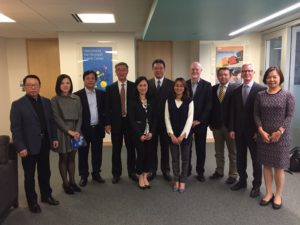
On September 27, 2018, the Washington State China Relations Council, in partnership with Northeastern University and Illuminate Global LLC, hosted a delegation from the city of Ningbo in Zhejiang Province for the US-China International Education Exchange Roundtable. The delegation included representatives from many areas related to education, including the Ningbo Education Bureau, universities, vocational schools, and high schools.

WSCRC was honored to invite a variety of representatives to speak about Washington State’s educational system and its promotion of international programs, particularly educational exchange between the US and China. Washington State speakers included: Dr. Kurt Buttleman, Interim Vice Chancellor for Academic & Student Success at Seattle Colleges; Linda Du, International Programs Manager – China Specialist at Shoreline Community College; Denise Dyette, Primary Division Head at the Evergreen School; Patrick Erwin, Principal of Lincoln High School; Angela Dávila, World Languages Program Supervisor of Learning and Teaching at the Washington State Office of the Superintendent of Public Instruction (OSPI); and Scott Han, Assistant Director of International Marketing at Cascadia College.

Giving statements on behalf of the entire delegation, four speakers from Ningbo described the educational opportunities available for American students interested in studying abroad, as well as their efforts to promote exchange programs to the United States for Chinese students. The Ningbo delegation was led by Xuebo Fu, Counsel at Ningbo Education Bureau. Also speaking for the delegation were Wei Huang, Assistant President at Zhejiang Fashion Institute of Technology; Dinghai Shi, Principal of Ningbo Jiangshan High School; and Gang Wang, Vice Principal of Ningbo Economic and Trade High School.

The event brought together representatives to strengthen international ties between the US and China through education and exchange. Though there have been recent changes in the US-China relationship that have affected their institutions, both sides expressed willingness to cooperate on international efforts.

WSCRC extends special thanks to WSCRC board member Mary Trimarco, Business and Outreach Director at Northeastern University in Seattle as venue host.

Summary Author: Mengyao Liu

Written by wscrc_admin · Categorized: Recent News · Tagged: Delegation, education, international, US-China relations

  • « Previous Page
  • 1
  • …
  • 25
  • 26
  • 27
  • 28
  • 29
  • …
  • 38
  • Next Page »

Search

Language Option

Social Media

Get In Touch

Contact Us

Address

Washington State China Relations Council

1301 5th Avenue, Suite 1500 Seattle, WA 98101-2611

Tel: (206) 441 - 4419

E-mail: info@wscrc.org

Copyright © 2026 Washington State China Relations Council. All rights reserved. · Privacy Policy