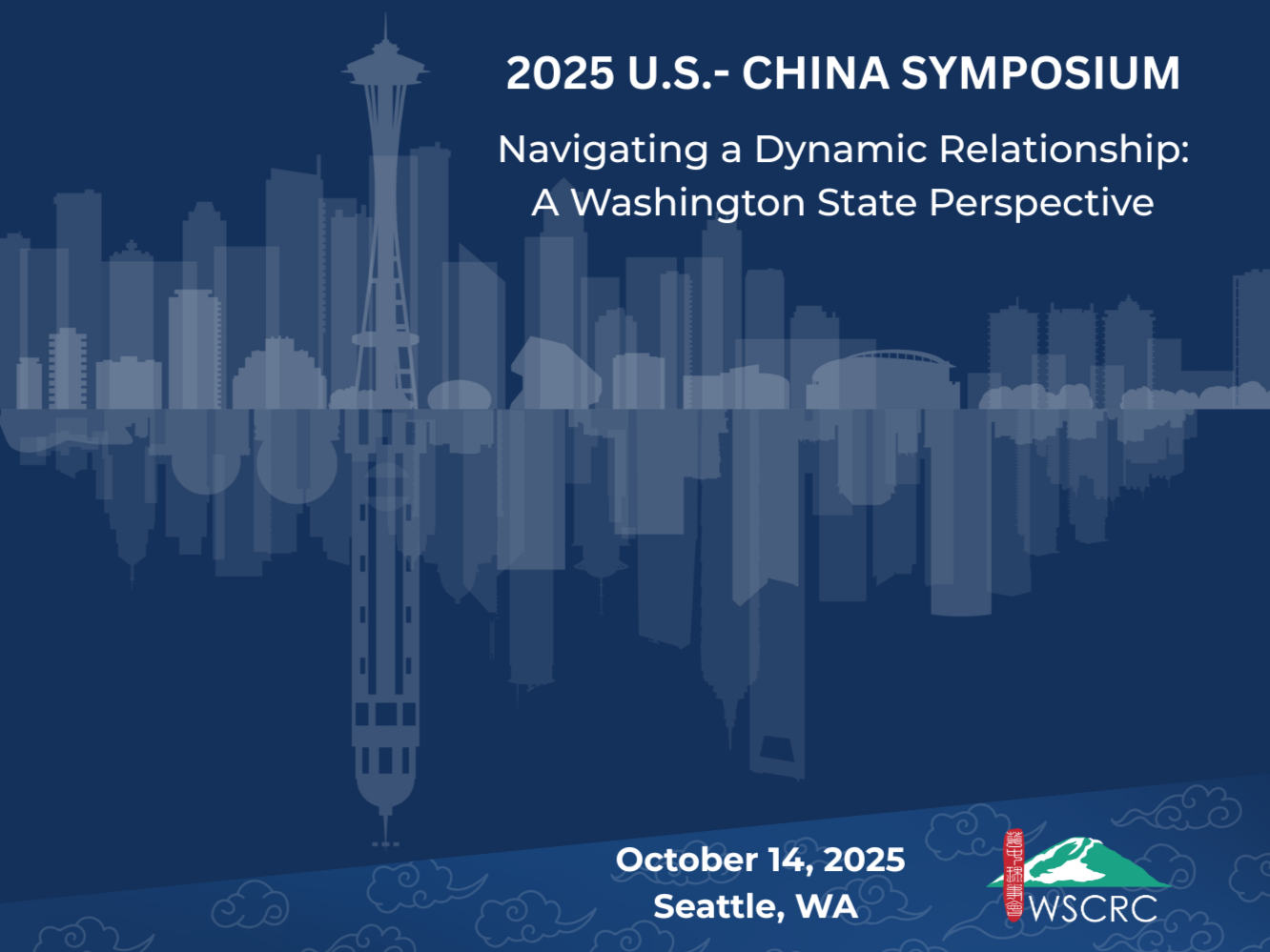
WSCRC 2025 U.S.-China Symposium | Navigating a Dynamic Relationship: A Washington State Perspective
As geopolitical tensions and economic shifts continue to reshape U.S.-China relations, their impact is being felt globally—and especially here in Washington State. Join the Washington State China Relations Council on October 14, 2025 in Seattle, for a timely and in-depth conference exploring the future of U.S.-China relations through a local lens.
This half-day event will offer critical insights into the challenges and opportunities ahead, featuring leading regional and national voices on U.S.-China policy and business practices. Discussions will include a broad outlook on bilateral relations, a detailed analysis of trade and tariff impacts on Washington’s key sectors, and an exploration of the evolving technology landscape.
Whether you work in international business, policymaking, education, or community engagement, this conference will provide valuable perspectives and foster meaningful dialogue on how Washington State can navigate the changing dynamics of the world’s most consequential bilateral relationship.
Sponsorship Opportunities: Email manw@wscrc.org to learn more.
Interested in discounted access? Ask about WSCRC membership opportunities.
Media: Members of the press must email info@wscrc.org for registration inquiries
Agenda
9:00 – 9:05 AM Welcome Remarks
Jim Young, Board Chair, Washington State China Relations Council
Man Wang, Executive Director, Washington State China Relations Council
9:05 – 9:30 AM Keynote Remarks
- Sean Stein, President, US-China Business Council
9:30 – 10:30 AM Panel 1: Global Powers in Motion: Decoding U.S.-China Dynamics
This session will dive into the shifting landscape of U.S.-China relations, exploring the balance between competition and collaboration. Our expert panelists will unpack recent policy moves, analyze the strategic motivations behind them, and offer insights on what the future might hold for the world’s two largest economies.
- James McGregor, Chairman, APCO’s Greater China
- Jackie Miller, President & CEO, World Affairs Council Seattle
- Victor Shih, Director, 21st Century China Center; Professor and Ho Miu Lam Chair in China and Pacific Relations, UC San Diego
- Jake Werner, Director of East Asia Program, Quincy Institute
10:30 – 11:30 AM Panel 2: Trade, Tariffs, and Washington’s Economic Landscape
This session explores how shifting trade policies and tariffs are reshaping Washington’s economy. From aerospace and agriculture to ports and shipping, panelists will discuss the challenges, opportunities, and strategies for adapting in a rapidly changing global trade environment.
- Edward Alden, Visiting Professor, WWU; Senior Fellow, Council on Foreign Relations
- Kristin Ang, Commissioner, Port of Tacoma; Managing Member, Northwest Seaport Alliance
- John Bruns, former VP for Sales and Marketing, Boeing Commercial Airplanes; former President of Boeing China
- Riley Bushue, Vice President, Northwest Horticultural Council
- Julia Ying, President, Polar Bay Foods
11:30 – 11:45 AM Coffee/Tea Break
11:45 AM – 12:45 PM Panel 3: Innovation, Competition, and Collaboration in Technology
This panel will dive into the evolving landscape of technological innovation and competition between the U.S. and China. Panelists will assess where competition is intensifying, where cooperation is possible, and how shifting regulations and geopolitics are (re)shaping the future of innovation and influencing businesses, research institutions, and global competitiveness.
- Alvin Wang Graylin, Fellow/Lecturer, Stanford HAI/MIT; Author, “Our Next Reality”; Chairman, Virtual World Society; Former China President, HTC
- John VerWey, Advisor for the Global Security, Technology and Policy Group, Pacific Northwest National Laboratory (PNNL)
- Mike Yeh, Regional Vice President, Corporate External and Legal Affairs, Microsoft Asia
- Wenchi Yu, Non-resident fellow, Harvard Kennedy School; Host and Co-Producer, DC Insiders: Producer, Perspectives with Wenchi Yu
12:45 – 12:50 PM Closing
1:00 – 2:00 PM Lunch and Networking
Register Here
Tickets Sold Out!
Email manw@wscrc.org to join the waitlist.
SPEAKER BIOS
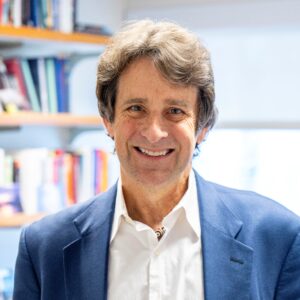 Edward Alden is the Ross Distinguished Visiting Professor at Western Washington University in Bellingham, WA, and a senior fellow at the Council on Foreign Relations. He is the author of Failure to Adjust: How Americans Got Left Behind in the Global Economy, and co-author of When the World Closed its Doors: The Covid-19 Pandemic and the Future of Border Control. His first book, The Closing of the American Border: Terrorism, Immigration, and Security Since 9/11, was a finalist for the Lukas Book Prize for narrative nonfiction. He has directed several CFR-sponsored independent task forces, including the 2018 report The Work Ahead: Machines, Skills, and U.S. Leadership in the Twenty-First Century and the 2009 report U.S. Immigration Policy. He was previously Washington bureau chief for the Financial Times and is a columnist for Foreign Policy.
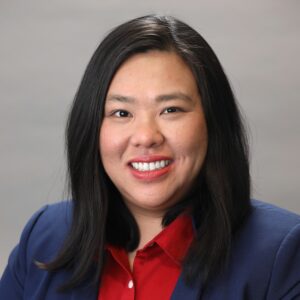 Kristin Ang is a Filipino-American attorney, community advocate, Port of Tacoma Commissioner and Northwest Seaport Alliance Managing Member. She made history as the first person of color elected to the Port of Tacoma commission, along with the historical endorsement of the Puyallup Tribe of Indians. She is on the Port’s environmental, DEI, and Tribal liaison committees. She is also on the executive board of the Central Puget Sound Economic Development District and the Washington Council on International Trade.
Commissioner Ang earned an academic and music scholarship at the University of Puget Sound, where she completed her business degree. She obtained her law degree at Cornell Law School. She believes in the power of community and is board president of the City Club of Tacoma, a Tacoma Rotary 8 member, and Greater Tacoma Community Foundation ambassador.
As Port of Tacoma commissioner, she is focused on advancing environmental leadership, building community relationships, and creating economic opportunity for all of Pierce County. Commissioner Ang’s goals include completing the Maritime | 253 Skills Center in collaboration with local schools to expand career opportunities for students in the region. Additionally, she is committed to leading the transition towards renewable energy, accelerating the cleanup of contaminated industrial lands, investing in transportation and technological infrastructure, safeguarding the port and its workers from challenges like sea-level rise, and redeveloping the Tideflats to create more family-wage jobs while increasing public access. Further, Commissioner Ang is dedicated to collaborating with the Puyallup Tribe of Indians on vital projects related to habitat restoration and maritime business. By continuing to work on these goals, Commissioner Ang aims to make substantial progress in enhancing both the environmental and economic aspects of the Port of Tacoma.
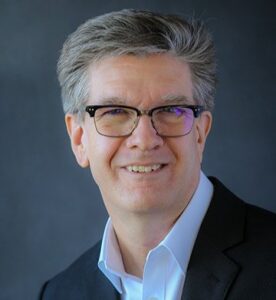 John Bruns recently retired from The Boeing Company as Commercial Sales & Marketing Global Strategic Initiatives vice president where he was responsible for Boeing’s strategic business initiatives aimed at strengthening Boeing’s engagement and presence in key high-growth markets.
He previously served as vice president Commercial Sales & Marketing – India and Southeast Asia from 2019-2023, based in Singapore. Prior to that he was president of Boeing China from 2016-2019, leading companywide activities based in Beijing where he also served as co-chair of the US-China Aviation Cooperation Program public-private partnership. John began his career with McDonnell Douglas in 1986 in Engineering Test & Evaluation before embarking on a 30-year association with the China market in 1990 and the first of three long-term assignments in Beijing in 1994. Following the merger of Boeing and McDonnell Douglas in 1997, John joined the Boeing Commercial Airplanes Sales team and led numerous successful airplane sales campaigns with Chinese airlines and leasing companies and, more recently, with Air India and Indian startup Akasa Air.
John spent his childhood in Taiwan and speaks Mandarin. He received a BS degree in mechanical engineering and a BA degree in East Asian studies from Bucknell University in Pennsylvania. He also earned an MBA in international business at the Drucker School of Management, Claremont Graduate University, California in 1991. John serves on the board of the Seattle World Affairs Council.
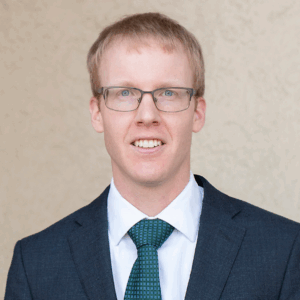 Riley Bushue is vice president of the Northwest Horticultural Council (NHC) which represents the growers, packers, and shippers of apples, cherries, and pears, in Washington, Oregon, and Idaho. He works on trade policy, market access, and related export issues for the NHC. Prior to joining the NHC, he was legislative director for Congressman Greg Walden of Oregon, working on trade, agriculture, and natural resources policy.
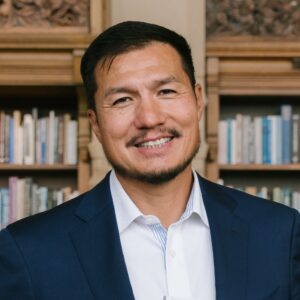 Alvin Wang Graylin (汪丛青) is a globally recognized tech leader, author, investor, and serial entrepreneur with over 30 years of innovation across AI, XR, cybersecurity, and semiconductors. He currently serves as Chairman of the Virtual World Society, Vice-Chair of the Industry of VR Alliance, and is a Digital Fellow at Stanford’s Digital Economy Lab (within HAI). Previously, he was Global VP and China President at HTC, where he led the company’s XR business for nearly a decade. His career includes exec roles at Intel, IBM, Trend Micro, and WatchGuard.
Graylin is the author of Our Next Reality (Hachette Books), which explores how the convergence of AI and XR will transform the future of society. He has founded four venture-backed startups in conversational AI search, mobile social, mobile AR, and AI-driven big data analytics, spanning both the U.S. and China markets. As an active investor, he has backed over 100 startups and helped launch HTC’s ViveX Global VR accelerator and SOSV’s mobile internet incubator.
Graylin holds an M.S. in Computer Science specializing in AI from MIT, an M.S. in Business from MIT’s Sloan School of Management with emphasis on entrepreneurship and operations, and a B.S. in Electrical Engineering from the University of Washington, focusing on VR, AI, and CPU architecture. Fluent in English, Mandarin, and Cantonese, Graylin’s bicultural background, Eurasian heritage and cross-border leadership experience uniquely position him at the intersection of technology, business, and global impact.
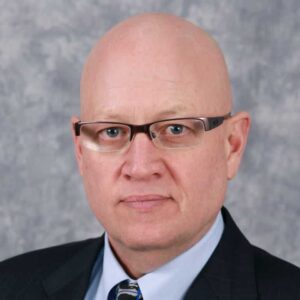 James McGregor is chairman of APCO’s greater China region and author of two highly regarded books: “No Ancient Wisdom, No Followers: The Challenges of Chinese Authoritarian Capitalism” and “One Billion Customers: Lessons from the Front Lines of Doing Business in China.” He also wrote the noted APCO monograph China’s Drive for Indigenous Innovation—A Web of Industrial Policies.
Prior to joining APCO, Jim was the founder and CEO of a China-focused consulting and research firm for hedge funds, a reporter for The Wall Street Journal and chief executive of Dow Jones & Company in China. Jim is also a former chairman of the American Chamber of Commerce in China and has long served as a leader of AmCham’s U.S. government relations function.
He is a member of the Council on Foreign Relations, National Committee on U.S.-China Relations, the International Council of Asia Society, the advisory board of the Atlantic Council’s Global China Hub and a board member of the U.S.-China Education Trust.
Jim is a professional speaker, regular television and radio commentator and a contributor of essays and opinion articles for a variety of publications. He lived in China for three decades and now based in the U.S. He splits his time between Minnesota, Washington D.C., the Bay Area, Shanghai, Beijing and elsewhere.
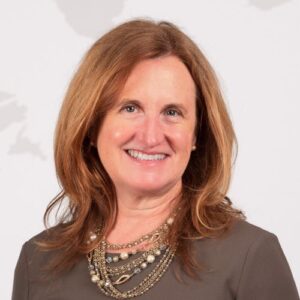 Jacqueline Miller has led the World Affairs Council of Seattle since May 2014. She held senior positions in policy organizations and non-profits on the east coast before moving to the Pacific Northwest. In Seattle, she also serves on the Mayor’s International Affairs Advisory Board; is a member of the Civic Council for UW’s Master of Arts in Applied International Studies (MAAIS) program; and serves on the Washington State Advisory Committee for the U.S. Global Leadership Coalition. She is a board member of the World Affairs Councils of America; a current board member and past chair of the board of Global Ties U.S, and is a member of the Board of Advisors of the George H.W. Bush Foundation for U.S.-China Relations. She is also a life member of the Council on Foreign Relations.
Prior to joining the World Affairs Council, Jacqueline served as Director of External Relations at Independent Diplomat in New York, working with marginalized democratic political actors to help them navigate the United Nations, the EU, and other international diplomatic fora. Previously, she was a Senior Associate at the EastWest Institute (EWI) in New York, where she created and led the U.S. program. At EWI, she focused on national security policy, the U.S.-Russia and U.S.-China relationships, as well as nuclear disarmament and nonproliferation issues. She was deputy director of the Council on Foreign Relations’ Washington (DC) programs, where she oversaw CFR’s robust DC meetings program as well as outreach on Capitol Hill and the DC diplomatic community. She got her start in think tanks at the Center for Strategic and International Studies, where she was deputy director of the Russia and Eurasia program. She has also taught at The George Washington University, where she undertook graduate work after earning undergraduate and graduate degrees from Cornell University.
She has been a commentator for various news sources (print, web, and broadcast), including the New York Times, the BBC, CBC, and Voice of America. Her honors include being named a Truman Security Fellow as well as receiving a Foreign Language Area Studies Fellowship (FLAS) for Russia. She was also an International Research and Exchanges Board (IREX) Visiting Scholar in Kyrgyzstan.
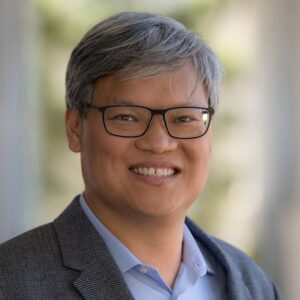 Victor Shih is a professor of political science, director of the 21st Century China Center, and the Ho Miu Lam Chair in China and Pacific Relations at the University of California at San Diego. Victor is an expert on the politics of Chinese banking policies, fiscal policies, and exchange rate, as well as the elite politics of China. He is the author of two books, “Factions and Finance in China: Elite Conflict and Inflation” and “Coalitions of the Weak: Elite Politics in China from Mao’s Stratagem to the Rise of Xi.” He is also editor of “Economic Shocks and Authoritarian Stability: Duration, Institutions and Financial Conditions.” Shih also has published widely in a number of journals, including The American Political Science Review, Comparative Political Studies, Journal of Politics, The China Quarterly, and Party Politics.
Shih is currently engaged in a study of the activities of the Chinese elite and of Chinese defense firms around the world. He is also maintaining a large database on biographical information of elites in China. He teaches courses including Financing the Chinese Miracle, Chinese Sources and Methods, Chinese Politics and Political Economy of Authoritarian Regimes.
Prior to joining UC San Diego, Shih was a professor of political science at Northwestern University and former principal for The Carlyle Group.
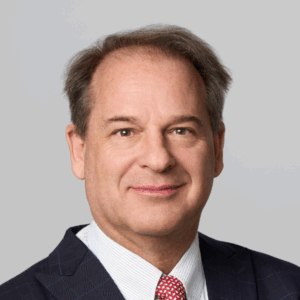 Sean Stein is the president of the US-China Business Council. He most recently served as the board chair of the American Chamber of Commerce in China and is the chair emeritus of the American Chamber of Commerce in Shanghai. He also co-chaired the China Public Policy Practice at Covington and Burling where he advised international businesses on political risk, public affairs, communications, and US and China government relations. He regularly assisted companies to resolve acute or long-term issues in China and to navigate challenges caused by conflicting US and Chinese policies and perceptions.
Sean previously served for nearly three decades as a US diplomat, including as Consul General in Shenyang and Shanghai. He also served on the China desk at the State Department, at the former consulate general in Chengdu, and in other positions around the Indo-Pacific. Sean speaks Mandarin and Indonesian and is a graduate of Georgetown University.
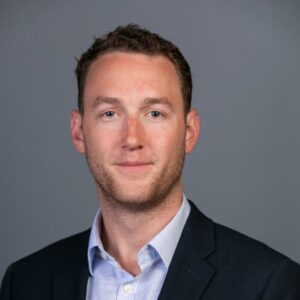 John VerWey is an advisor in the Pacific Northwest National Laboratory’s (PNNL) Global Security, Technology and Policy group. In this role he supports U.S. government sponsor efforts to protect and promote critical technologies for economic and national security. His work at PNNL focuses on supply chain security, investment screening, export controls, and defense industrial base integrity. He is also a non-resident fellow at Georgetown University’s Center for Security and Emerging Technology (CSET) and The National Bureau of Asian Research (NBR).
Before joining PNNL, VerWey worked as a civil servant at the Office of the U.S. Trade Representative (USTR), the U.S. International Trade Commission (USITC) and the U.S. Department of Commerce. In these positions he analyzed the effects of international trade, supply chains, Chinese industrial policies, export controls, and foreign direct investment on U.S. advanced technology industries, with a focus on microelectronics. He also served as a staff liaison to the Committee on Foreign Investment in the United States at USTR and supported investigations for the executive branch and congressional committees on economic competitiveness issues at the USITC and Commerce. Prior to federal government service, he consulted for The European Parliament’s Internal Market and Consumer Protection Committee and worked as a program manager at the American Enterprise Institute.
VerWey’s research on the semiconductor industry has been published by the United States International Trade Commission, the Journal of International Commerce and Economics, IEEE-Computer, and CSET, among others, and he has testified before the U.S.-China Economic and Security Review Commission.
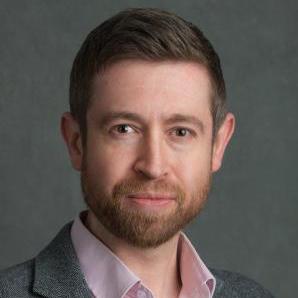 Jake Werner is director of the East Asia Program at the Quincy Institute. His research examines the emergence of great power conflict between the US and China and develops policies to rebuild constructive economic relations.
Prior to joining Quincy, Jake was a Postdoctoral Global China Research Fellow at the Boston University Global Development Policy Center, a Harper-Schmidt Fellow at the University of Chicago, a Fulbright Scholar at National Chiao Tung University in Taiwan, and a Fulbright-Hays Fellow at East China Normal University in Shanghai. He received his PhD in history from the University of Chicago.
Jake is also a cofounder of Justice Is Global, a grassroots organizing project that advocates for reforms to the global economy, and a cofounder of Critical China Scholars, a network of academics engaged in public education on Chinese politics and society. His writing has appeared in publications like Foreign Affairs, Time, The Nation, and The Guardian.
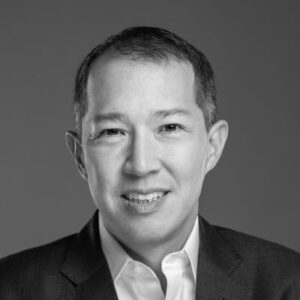 Mike Yeh is the Regional Vice President for Microsoft’s Corporate External and Legal Affairs (CELA) in Asia. He manages a team of more than 80 professionals who provide legal and government affairs support to Microsoft’s sales and business operations in the region. Yeh focuses on helping customers – both in the public and private sector – navigate novel legal, regulatory and policy issues at the intersection of technology and business.
He joined Microsoft in 2003 and previously led Microsoft’s CELA team in the Middle East and Africa based out of Dubai. Before that he was the Assistant General Counsel responsible for Microsoft’s Worldwide Public Sector and Industry team based out of Redmond, Washington. He has also worked in the Antitrust Group in Redmond and as the Director of Regulatory Affairs for Asia based out of Beijing. Yeh is skilled in a wide range of regulatory matters – from competition law to privacy and security across several jurisdictions.
Before joining Microsoft, Yeh represented clients in antitrust litigation matters and investigations by the U.S. Federal Trade Commission and the Department of Justice at Arnold & Porter in Washington D.C.
He has a law degree and a Master’s degree in Public Affairs from the University of Minnesota as well as a Bachelor’s degree in Mechanical Engineering from Cornell University.
 Julia Ying is the President of Polar Bay Foods and an ex-officio member of the ASMI Whitefish Committee. With more than 25 years in the seafood industry, she has extensive experience in Alaskan fish sourcing and processing management across China, Thailand, Vietnam, and Peru.
Before the pandemic, her team focused on processing in China, and since 2021, she has led Polar Bay’s global expansion across Southeast Asia and Latin America, developing innovative and sustainable seafood supply chain solutions for today’s dynamic global market.
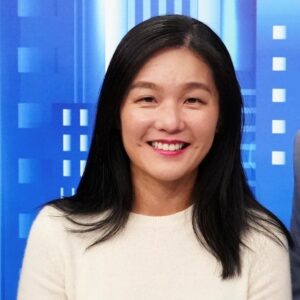 Wenchi Yu is a non-resident fellow at Harvard Kennedy School, where her work has been primarily focused on Asia-based technology companies and their globalization strategies. She is also the Host and Co-Producer of DC Insiders by TaiwanPlus, and Producer of a podcast focused on tech, business and geopolitics–Perspectives with Wenchi Yu.
Wenchi has been a business advisor to several high-growth global technology companies, where she advises on public policy, social impact, and public relations strategies. Prior to working with tech companies, she was with Goldman Sachs, where she headed strategic philanthropy and stakeholder engagement in Asia. Before joining the private sector, she worked in the US Department of State and US Congress.
Wenchi is the Founder and Chairwoman of Global Women Asia, a US-based nonprofit organization that invests in global leaders with Asian perspectives. She also sits on several boards, all of which have a focus on Asia.
THANK YOU TO OUR SPONSORS





PROMOTIONAL SPONSORS